
Antibiotics are one of the most important medical discoveries in history. They save lives every day by killing harmful bacteria that cause infections. But antibiotics cannot distinguish between the pathogenic bacteria making you ill and the trillions of beneficial bacteria that keep your gut healthy. A single course of broad-spectrum antibiotics can reduce microbial diversity by up to 30 percent, and some studies suggest the microbiome may not fully recover for months or even years without deliberate intervention. If you have recently finished a course of antibiotics and are experiencing digestive symptoms like bloating, loose stools, or general malaise, you are not imagining it. Your gut flora has taken a significant hit, and it needs targeted support to recover.
This guide explains exactly what happens to your microbiome during antibiotic treatment, the timeline for recovery, and the most effective evidence-based strategies to rebuild your gut health. Whether you are dealing with post-antibiotic diarrhoea, recurring thrush, or simply want to protect your long-term health, this article provides a practical, step-by-step roadmap.
What Antibiotics Do to Your Gut Microbiome
Your gut microbiome is a complex ecosystem of bacteria, fungi, viruses, and archaea that collectively weigh around 2 kilograms. These microorganisms perform essential functions including nutrient absorption, vitamin synthesis, immune regulation, and neurotransmitter production. When you take antibiotics, this ecosystem is disrupted in several key ways.
Loss of Microbial Diversity
Broad-spectrum antibiotics such as amoxicillin, ciprofloxacin, and co-amoxiclav are designed to target a wide range of bacteria. While this makes them effective against infections, it also means they wipe out large populations of beneficial species. Research published in the journal Nature Microbiology found that a single course of antibiotics can eliminate entire bacterial species from the gut, with some never returning without intervention. This loss of diversity is significant because a diverse microbiome is a resilient microbiome. The more species you have, the better your gut can resist colonisation by opportunistic pathogens.
Opportunistic Overgrowth
When antibiotics clear out beneficial bacteria, they create empty ecological niches. Opportunistic organisms that are naturally resistant to the antibiotic can then proliferate unchecked. The most well-known example is Clostridioides difficile (C. diff), which can cause severe diarrhoea and colitis after antibiotic use. Candida overgrowth is another common consequence, as the yeast Candida albicans thrives when its bacterial competitors are eliminated. This is why many people develop oral or vaginal thrush during or after antibiotic treatment.
Disrupted Gut Barrier Function
Your beneficial gut bacteria play a crucial role in maintaining the integrity of your intestinal lining. They produce short-chain fatty acids like butyrate, which fuel the cells of your gut wall and keep the tight junctions between cells sealed. When antibiotic use depletes these bacteria, butyrate production drops, and the gut barrier can become more permeable. This is sometimes referred to as leaky gut, and it can allow bacterial fragments and undigested food particles to enter the bloodstream, triggering inflammation and immune activation.
Altered Immune Function
Approximately 70 percent of your immune system resides in and around your gut. The microbiome plays a direct role in training and regulating immune cells. When antibiotics disrupt this microbial community, immune function can become dysregulated. This may manifest as increased susceptibility to infections, heightened allergic responses, or even autoimmune flare-ups in predisposed individuals.
The Recovery Timeline: How Long Does It Take?
One of the most common questions people ask is how long it takes for the gut to recover after antibiotics. The honest answer is that it varies considerably depending on several factors.
| Factor | Impact on Recovery | | :--- | :--- | | Type of antibiotic | Broad-spectrum antibiotics (e.g., ciprofloxacin, clindamycin) cause more damage than narrow-spectrum ones | | Duration of course | Longer courses cause more disruption; repeated courses compound the damage | | Individual baseline | A diverse, healthy microbiome before treatment recovers faster | | Diet during and after | A fibre-rich, diverse diet accelerates recovery; a processed diet slows it | | Probiotic support | Targeted probiotic use during and after treatment can significantly speed recovery | | Age | Older adults and very young children may take longer to recover |
Research suggests that while some bacterial populations begin to recover within days of completing antibiotics, full restoration of microbial diversity can take three to six months. A landmark study in the journal mBio found that some species had not recovered even six months after treatment. This underscores the importance of active, deliberate microbiome restoration rather than simply waiting for things to return to normal on their own.
Phase 1: During Antibiotic Treatment (Damage Limitation)
Ideally, microbiome protection should begin the moment you start taking antibiotics, not after you finish the course. There are several evidence-based strategies you can implement immediately.
Take Saccharomyces boulardii
Saccharomyces boulardii is a beneficial yeast, not a bacterium, which means it is completely unaffected by antibiotics. Multiple clinical trials and meta-analyses have demonstrated that S. boulardii significantly reduces the risk of antibiotic-associated diarrhoea. It works by strengthening the gut barrier, producing antimicrobial compounds that inhibit pathogens like C. diff, and supporting the growth of beneficial bacteria. Take it throughout your antibiotic course and for at least two weeks afterwards.
Maintain a Diverse, Fibre-Rich Diet
While it may be tempting to eat bland, simple foods when you are unwell, your remaining gut bacteria need fuel to survive. Prebiotic fibres from vegetables, fruits, legumes, and whole grains feed beneficial bacteria and help them compete against opportunistic species. Aim for as much dietary diversity as possible. Each different plant food feeds different bacterial species, so variety is genuinely more important than quantity.
Include Fermented Foods Daily
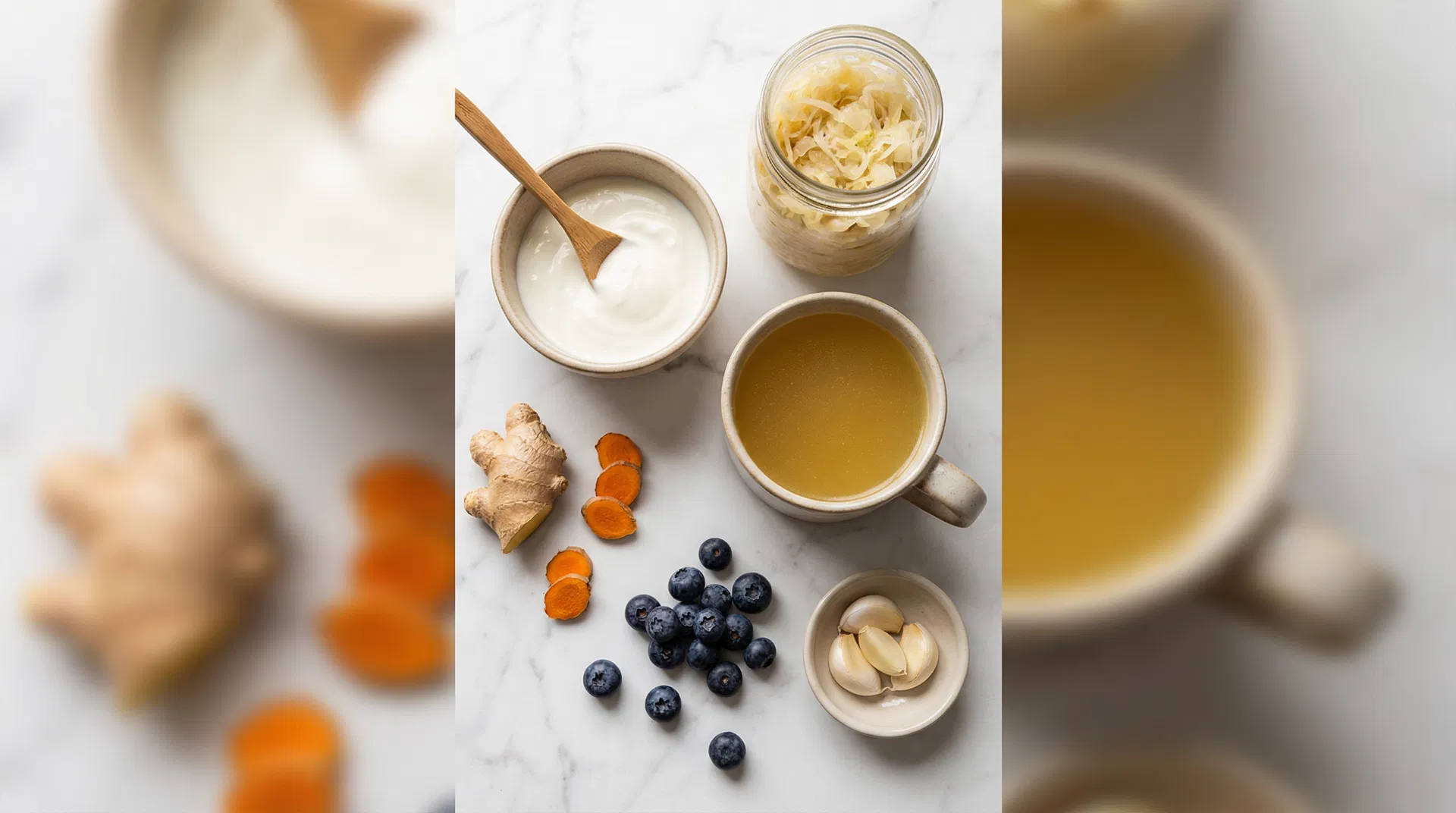
Fermented foods like natural yoghurt, kefir, sauerkraut, and kimchi contain live bacteria that can help replenish your gut flora during antibiotic treatment. A Stanford University study found that a diet high in fermented foods significantly increased microbial diversity over a 10-week period. Even small daily servings can make a meaningful difference.
Phase 2: The First Two Weeks After Antibiotics (Rapid Repopulation)
The two weeks immediately following your antibiotic course represent a critical window for microbiome recovery. The ecological niches left by eliminated bacteria are still open, and what fills them will shape your gut health for months to come.
Introduce a Multi-Strain Probiotic
Now is the time to introduce a high-quality, multi-strain probiotic containing well-researched species. Look for a product that contains at least 10 billion colony-forming units (CFU) and includes strains from the Lactobacillus and Bifidobacterium genera, as these are among the most commonly depleted by antibiotics. Key strains to look for include Lactobacillus rhamnosus GG, Lactobacillus acidophilus, Bifidobacterium longum, and Bifidobacterium lactis. Take your probiotic at least two hours away from any remaining antibiotic doses to maximise survival.
Increase Prebiotic Intake Gradually
Ramp up your intake of prebiotic-rich foods to feed the beneficial bacteria you are reintroducing. Good sources include garlic, onions, leeks, asparagus, Jerusalem artichokes, bananas, oats, and flaxseeds. If you are prone to bloating, increase these foods gradually to allow your gut to adjust. Starting with cooked versions of these foods can make them easier to tolerate initially.
Prioritise Bone Broth and Gut-Healing Nutrients
Bone broth is rich in glutamine, glycine, and collagen, all of which support gut barrier repair. Glutamine is the primary fuel source for the cells lining your small intestine and has been shown to help restore tight junction integrity. Zinc is another essential nutrient for gut barrier function. If you are not getting enough through diet, a short course of zinc carnosine supplementation can be beneficial.
Phase 3: Weeks 3 to 12 (Deep Restoration)
The initial repopulation phase sets the foundation, but true microbiome restoration is a longer process that requires sustained effort over several months.
The 30-Plant Challenge
Research from the American Gut Project found that people who eat 30 or more different plant foods per week have significantly more diverse gut microbiomes than those who eat fewer than 10. This includes fruits, vegetables, herbs, spices, nuts, seeds, legumes, and whole grains. Each plant food contains unique fibres and polyphenols that feed different bacterial species. Keep a weekly tally and aim to hit 30 different plants. This single strategy is one of the most powerful things you can do for long-term microbiome diversity.
Consider Targeted Functional Testing
If your symptoms persist beyond four to six weeks despite following the steps above, it may be worth investigating further with a comprehensive stool analysis. This can reveal exactly which bacterial populations have been depleted, whether opportunistic organisms have overgrown, and how well your digestive function is performing. A functional medicine practitioner can use these results to create a highly targeted restoration protocol.
Support Your Gut-Brain Axis
Antibiotic-related microbiome disruption can affect your mood, sleep, and cognitive function through the gut-brain axis. Many neurotransmitters, including approximately 90 percent of your serotonin, are produced in the gut. Supporting your mental health during this recovery period is important. Regular exercise, adequate sleep, and stress management all positively influence microbiome recovery.
Foods to Prioritise and Foods to Avoid During Recovery
What you eat during the recovery period can either accelerate or hinder your microbiome restoration. Here is a practical guide:
| Prioritise | Limit or Avoid | | :--- | :--- | | Fermented foods (kefir, sauerkraut, kimchi, natural yoghurt) | Refined sugar (feeds opportunistic yeast and bacteria) | | Prebiotic-rich vegetables (garlic, onions, leeks, asparagus) | Highly processed foods (low in fibre, high in additives) | | Diverse plant foods (aim for 30+ per week) | Alcohol (disrupts gut barrier and kills beneficial bacteria) | | Bone broth (glutamine for gut barrier repair) | Artificial sweeteners (shown to negatively alter microbiome composition) | | Polyphenol-rich foods (berries, green tea, dark chocolate, olive oil) | Excessive red meat (can promote inflammatory bacterial species) | | Omega-3 rich foods (oily fish, walnuts, flaxseeds) | Unnecessary medications (NSAIDs, PPIs can further disrupt the gut) |
When to Seek Professional Support
While many people can successfully rebuild their gut health using the strategies outlined above, some situations warrant professional guidance. You should consider working with a qualified practitioner if:
* Your digestive symptoms persist beyond six weeks after completing antibiotics. * You have taken multiple courses of antibiotics in the past year. * You are experiencing new food sensitivities or intolerances that developed after antibiotic use. * You have a history of recurrent infections, suggesting your immune function has been compromised. * You are experiencing significant mood changes, brain fog, or fatigue that began after antibiotic treatment.
A functional medicine practitioner can run targeted testing to assess the state of your microbiome and create a personalised restoration protocol. At Gut Philosophy, we use advanced microbiome testing to identify exactly which bacterial populations need support and tailor our recommendations accordingly.
Preventing Future Microbiome Damage
Prevention is always better than cure. While antibiotics are sometimes medically necessary and should never be refused when genuinely needed, there are steps you can take to minimise unnecessary exposure and protect your gut.
* Always ask your doctor whether antibiotics are truly necessary for your condition. Many infections, particularly viral ones, resolve without them. * If antibiotics are prescribed, ask whether a narrow-spectrum option is available, as these cause less collateral damage to the microbiome. * Implement the protective strategies outlined in Phase 1 every time you take antibiotics. * Invest in building a diverse, resilient microbiome through diet and lifestyle so that when you do need antibiotics, your gut is better equipped to recover.
Frequently Asked Questions
How long after antibiotics should I take probiotics?
You can take Saccharomyces boulardii during your antibiotic course as it is a yeast and unaffected by antibiotics. For bacterial probiotics, take them at least two hours away from your antibiotic dose to maximise survival. Continue probiotic supplementation for at least four to eight weeks after completing your course.
Can antibiotics cause permanent gut damage?
While a single short course of antibiotics is unlikely to cause permanent damage in most people, repeated courses can lead to lasting changes in microbiome composition. Some bacterial species may be permanently lost without targeted intervention. This is why proactive restoration after every course is so important.
What is the best probiotic to take after antibiotics?
During antibiotics, Saccharomyces boulardii is the best choice as it survives antibiotic treatment. After completing your course, a multi-strain probiotic containing Lactobacillus rhamnosus GG, Lactobacillus acidophilus, and Bifidobacterium longum is well-supported by research. Always choose a product from a reputable manufacturer with guaranteed potency.
Should I take antibiotics with food?
Follow the specific instructions for your antibiotic, as some should be taken with food and others on an empty stomach. However, eating a diverse, fibre-rich diet throughout your course is important for supporting your remaining gut bacteria regardless of timing.
Take Control of Your Recovery
Rebuilding your gut after antibiotics is not something that happens passively. It requires deliberate, sustained effort over weeks and months. But the good news is that the gut microbiome is remarkably adaptable, and with the right support, significant recovery is absolutely achievable. If you are struggling with persistent symptoms after antibiotic use and want expert guidance on restoring your gut health, book a discovery call with Elena to discuss a personalised recovery plan. You can also learn more about our gut health services and how functional medicine testing can identify exactly what your microbiome needs.