
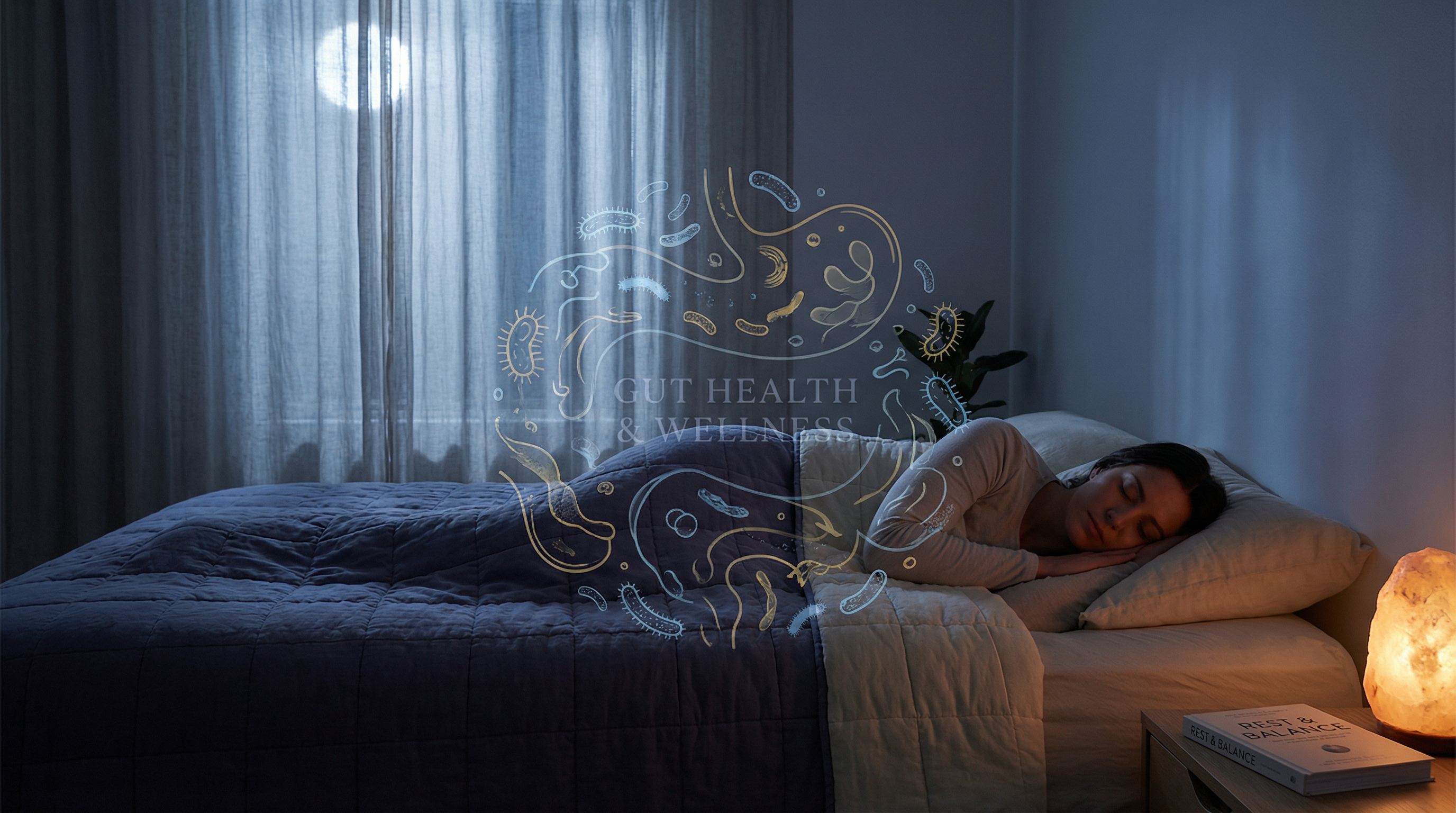
Most people understand that diet and exercise affect sleep quality, but few realise that the trillions of bacteria living in their gut may be equally important. Emerging research reveals a fascinating bidirectional relationship between the gut microbiome and sleep: your gut bacteria influence how well you sleep, and your sleep quality, in turn, shapes the composition of your microbiome.
The Gut-Sleep Connection: What the Research Shows
The relationship between gut health and sleep is mediated through several interconnected pathways that scientists are only beginning to fully understand.
Neurotransmitter Production
Your gut bacteria are directly involved in producing neurotransmitters that regulate the sleep-wake cycle. Approximately 90 per cent of the body's serotonin is produced in the gut, and serotonin is the precursor to melatonin — the hormone that signals to your body that it is time to sleep. When gut bacteria are imbalanced, serotonin production can be disrupted, leading to insufficient melatonin and difficulty falling or staying asleep. This is one of the key mechanisms underlying the gut-brain connection.
GABA and Relaxation
Gamma-aminobutyric acid (GABA) is the primary inhibitory neurotransmitter in the brain, responsible for calming neural activity and promoting relaxation. Several species of Lactobacillus and Bifidobacterium produce GABA directly. A depleted population of these bacteria may contribute to difficulty winding down at night.
Cortisol and the Stress Response
The gut microbiome influences the hypothalamic-pituitary-adrenal (HPA) axis, which governs cortisol production. Dysbiosis can lead to an overactive stress response, with elevated evening cortisol levels that make it difficult to fall asleep and reduce the proportion of restorative deep sleep.
Immune Signalling and Inflammation
An imbalanced microbiome promotes the production of pro-inflammatory cytokines. While acute inflammation can induce sleepiness (as you may have experienced during illness), chronic low-grade inflammation disrupts sleep architecture, reducing time spent in REM and deep sleep stages.
The Circadian Rhythm of the Microbiome
Remarkably, gut bacteria have their own circadian rhythms. The composition and activity of the microbiome fluctuate throughout the day, influenced by meal timing, light exposure and sleep patterns. Disrupting these rhythms — through shift work, jet lag or irregular eating — can alter the microbiome in ways that further impair sleep.
How Poor Sleep Damages the Gut
The relationship works in both directions. Sleep deprivation and poor sleep quality have measurable negative effects on the gut:
Reduced microbial diversity — Even two nights of partial sleep deprivation can reduce the diversity of gut bacteria, a key marker of microbiome health.
Increased intestinal permeability — Sleep loss weakens the gut barrier, potentially contributing to leaky gut and the systemic inflammation that follows.
Altered food choices — Poor sleep increases cravings for sugar and processed foods, which further disrupt the microbiome.
Impaired immune function — Sleep deprivation suppresses immune surveillance in the gut, allowing pathogenic organisms to gain a foothold.
Elevated stress hormones — Insufficient sleep raises cortisol levels, which directly affects gut motility, secretion and barrier function.
Signs Your Gut May Be Affecting Your Sleep
Consider whether you experience any of the following patterns:
- Difficulty falling asleep despite feeling tired
- Waking frequently during the night, particularly between 2 and 4 am
- Unrefreshing sleep — waking feeling tired despite adequate hours in bed
- Digestive symptoms (bloating, reflux, discomfort) that worsen in the evening
- Increased anxiety or racing thoughts at bedtime
- Sugar cravings that intensify in the afternoon and evening
Strategies to Improve Both Gut Health and Sleep
Dietary Approaches
Eat a diverse, fibre-rich diet — Aim for 30 different plant foods per week to support microbial diversity. Include prebiotic-rich foods such as garlic, onions, leeks, asparagus, bananas and oats.
Include tryptophan-rich foods at dinner — Tryptophan is the amino acid precursor to serotonin and melatonin. Good sources include turkey, chicken, eggs, cheese, nuts, seeds and tofu.
Limit sugar and processed foods — These feed pathogenic bacteria and disrupt the microbial balance that supports healthy neurotransmitter production.
Avoid large meals close to bedtime — Eating within 2-3 hours of sleep can disrupt digestion and interfere with sleep onset. If you need a snack, choose something small and easily digestible.
Reduce caffeine and alcohol — Both substances disrupt the microbiome and impair sleep quality. Avoid caffeine after midday and limit alcohol consumption.
Lifestyle Practices
Maintain consistent meal times — Regular eating patterns support the circadian rhythms of your gut bacteria. Try to eat meals at roughly the same times each day.
Get morning sunlight — Exposure to natural light within the first hour of waking helps synchronise both your circadian clock and your microbiome's daily rhythms.
Exercise regularly, but not late — Moderate exercise supports microbial diversity and improves sleep quality. However, intense exercise close to bedtime can be stimulating.
Manage stress — Chronic stress disrupts both the microbiome and sleep. Incorporate daily stress-reduction practices such as deep breathing, meditation or gentle yoga.
Targeted Supplementation
Magnesium glycinate — Supports GABA activity, muscle relaxation and sleep onset. Many people in the UK are deficient in magnesium.
Specific [probiotic](/resources/articles/probiotics-complete-guide/) strains — Lactobacillus rhamnosus and Bifidobacterium longum have shown benefits for both gut health and sleep quality in clinical studies.
L-theanine — An amino acid found in green tea that promotes relaxation without drowsiness and supports GABA production.
The Bottom Line
The connection between gut health and sleep is a two-way street: a healthy microbiome supports restful sleep, and quality sleep supports a healthy microbiome. If you are struggling with sleep issues alongside digestive symptoms, addressing your gut health may be the missing piece of the puzzle. A functional medicine approach that evaluates your microbiome, identifies imbalances and implements targeted dietary and lifestyle strategies can help break the cycle and restore both your gut health and your sleep.