
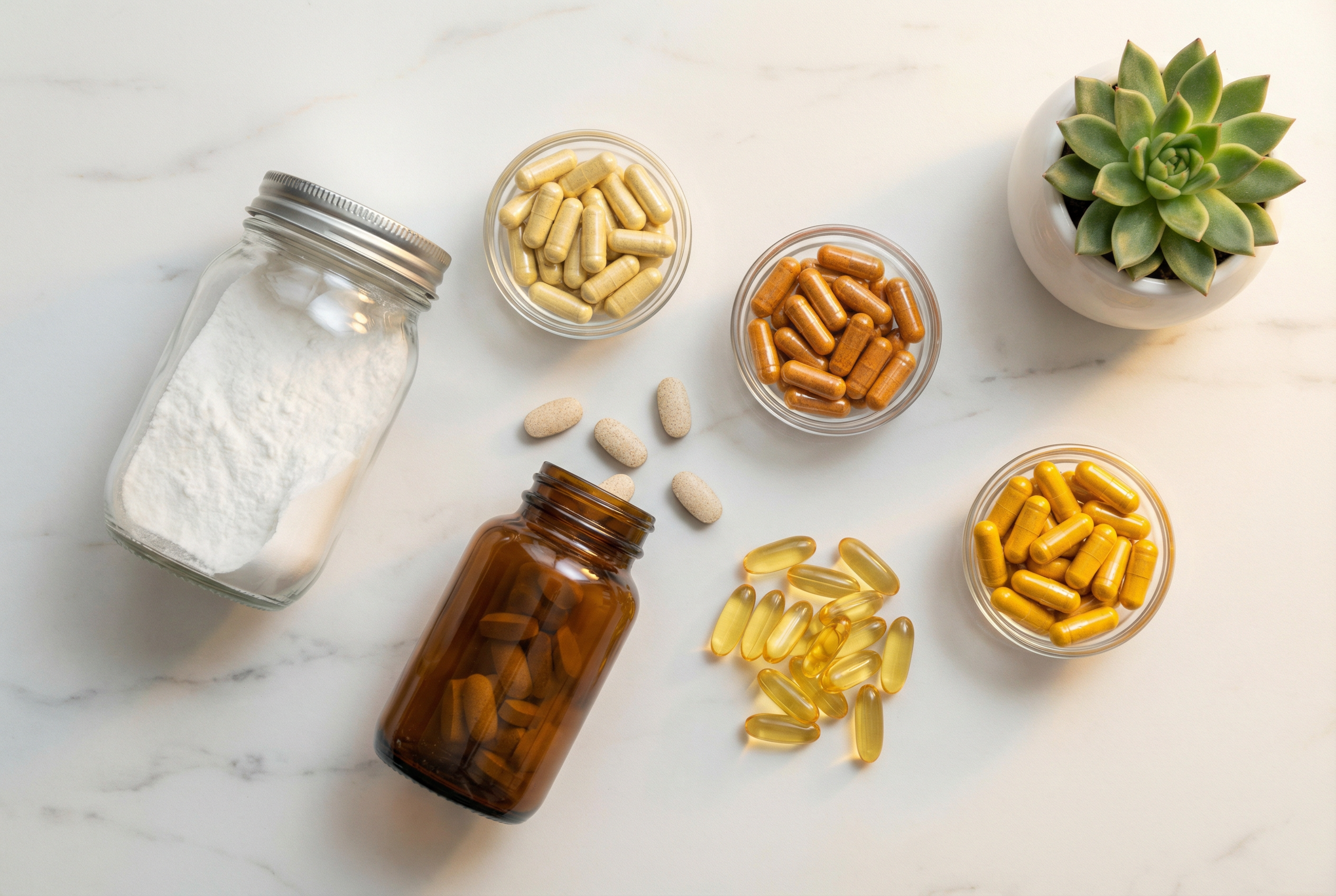
Walk into any health food shop or browse online and you will find hundreds of supplements claiming to support gut health. The sheer volume of options, from probiotics and prebiotics to amino acids, herbal extracts, and digestive enzymes, can be paralysing. As a functional medicine practitioner, I am frequently asked which supplements are worth taking and which are a waste of money. The answer, as with most things in health, depends entirely on the individual. But there are certain supplements with strong evidence behind them that I recommend regularly in clinical practice.
The Foundation: Food First
Before discussing supplements, it is essential to emphasise that no supplement can compensate for a poor diet. A diverse, fibre-rich diet with plenty of prebiotic foods, fermented foods, quality proteins, and healthy fats provides the foundation for gut health. Supplements are exactly what the name suggests: they supplement an already solid dietary foundation.
That said, there are situations where targeted supplementation can accelerate healing, address specific deficiencies, or provide therapeutic doses of nutrients that would be difficult to obtain from food alone.
L-Glutamine
L-glutamine is the most abundant amino acid in the body and the primary fuel source for the cells that line the small intestine (enterocytes). When the gut lining is damaged, whether from leaky gut, inflammation, infection, or chronic stress, L-glutamine plays a critical role in repair and regeneration.
Evidence: Multiple studies have demonstrated that L-glutamine supplementation can reduce intestinal permeability, support mucosal healing, and improve symptoms in patients with IBS. A landmark 2019 study published in the journal Gut showed that L-glutamine significantly reduced IBS symptoms compared to placebo.
Typical dose: 5 to 15 grams daily, usually taken on an empty stomach. Higher doses may be used therapeutically under practitioner guidance.
Best for: Leaky gut, IBS, post-infection gut repair, inflammatory bowel conditions, and anyone undergoing gut healing protocols.
Zinc Carnosine
Zinc carnosine is a chelated form of zinc that has a particular affinity for the stomach and upper intestinal lining. It has been extensively studied in Japan, where it is a licensed pharmaceutical for gastric ulcers, and is increasingly used in functional medicine for gut healing.
Evidence: Research shows that zinc carnosine stabilises the gut mucosa, reduces inflammation, promotes wound healing in the GI tract, and can help repair damage caused by NSAIDs and other medications. It has also shown benefit in reducing intestinal permeability.
Typical dose: 75 mg twice daily, taken between meals.
Best for: Gastritis, acid reflux, stomach ulcers, NSAID-induced gut damage, and as part of comprehensive gut healing protocols.
Digestive Enzymes
Digestive enzymes help break down proteins, fats, and carbohydrates into absorbable nutrients. While the body produces its own enzymes, production can decline with age, chronic stress, pancreatic insufficiency, or after gallbladder removal.
Evidence: Enzyme supplementation has been shown to reduce bloating, gas, and abdominal discomfort in patients with functional dyspepsia and pancreatic insufficiency. They are particularly helpful for people who experience symptoms after meals.
Key enzymes to look for: Protease (proteins), lipase (fats), amylase (starches), lactase (dairy), and alpha-galactosidase (beans and cruciferous vegetables).
Best for: Post-meal bloating, gallbladder removal, low stomach acid, pancreatic insufficiency, and age-related digestive decline.
Berberine
Berberine is a plant alkaloid found in goldenseal, Oregon grape, and barberry. It has broad-spectrum antimicrobial, anti-inflammatory, and metabolic properties that make it one of the most versatile supplements in functional medicine.
Evidence: Berberine has demonstrated effectiveness against SIBO, candida overgrowth, and various pathogenic bacteria. It also has well-documented benefits for blood sugar regulation, making it valuable for patients with metabolic issues linked to gut dysbiosis.
Typical dose: 500 mg two to three times daily with meals. Courses typically last four to eight weeks.
Best for: SIBO, candida, gut infections, blood sugar imbalances, and metabolic support.
Probiotics
Probiotics are live beneficial bacteria that can help restore microbial balance in the gut. However, not all probiotics are equal, and the strain specificity matters enormously.
| Strain | Primary Benefit | | :--- | :--- | | Lactobacillus rhamnosus GG | IBS, antibiotic-associated diarrhoea, immune support | | Saccharomyces boulardii | Candida, C. difficile, traveller's diarrhoea | | Bifidobacterium infantis 35624 | IBS (all subtypes), bloating | | Lactobacillus plantarum 299v | IBS, bloating, flatulence | | VSL#3 (multi-strain) | Ulcerative colitis, pouchitis |
Key principle: Choose probiotics based on the condition being treated, not just the CFU count. A targeted single-strain probiotic at the right dose is often more effective than a generic multi-strain product.
Omega-3 Fatty Acids
Omega-3 fatty acids, particularly EPA and DHA from fish oil, are potent anti-inflammatory compounds that support gut barrier integrity and modulate the immune response in the gut.
Evidence: Omega-3 supplementation has been shown to increase the production of anti-inflammatory short-chain fatty acids, support the growth of beneficial bacteria such as Bifidobacterium and Lactobacillus, and reduce markers of intestinal inflammation.
Typical dose: 2 to 3 grams of combined EPA and DHA daily.
Best for: Inflammatory bowel disease, gut inflammation, autoimmune conditions with gut involvement, and general gut health maintenance.
Deglycyrrhizinated Liquorice (DGL)
DGL is a form of liquorice root that has had the glycyrrhizin removed (the compound that can raise blood pressure). It has a long history of use for soothing the upper GI tract and supporting mucosal healing.
Evidence: DGL has been shown to increase mucus production in the stomach and oesophagus, protect against NSAID-induced damage, and support healing of gastric and duodenal ulcers.
Typical dose: 400 to 800 mg chewed before meals.
Best for: Acid reflux, gastritis, stomach ulcers, and oesophageal irritation.
Slippery Elm
Slippery elm bark contains mucilage, a gel-like substance that coats and soothes the digestive tract. It has been used in traditional medicine for centuries and remains a staple in functional gut health protocols.
Evidence: While large-scale clinical trials are limited, slippery elm has demonstrated mucosal protective effects and has been shown to increase mucus secretion in the GI tract. It is well-tolerated and widely used in clinical practice.
Typical dose: 400 to 500 mg three times daily, or as a powder mixed with water.
Best for: IBS, inflammatory bowel conditions, acid reflux, and general gut soothing.
When to Supplement and When Not To
Supplements should be used strategically, not indiscriminately. Here are some guiding principles:
Do supplement when: You have identified a specific condition or deficiency through testing, you are undergoing a structured gut healing protocol, you need therapeutic doses that food alone cannot provide, or you are recovering from antibiotics or gut infections.
Do not supplement when: You are using supplements as a substitute for dietary changes, you are self-prescribing without understanding the root cause, you are taking multiple supplements without professional guidance, or you have not addressed basic foundations like diet, sleep, and stress management.
Quality Matters
The supplement industry is poorly regulated, and product quality varies enormously. When choosing supplements, look for third-party testing (such as NSF, USP, or ConsumerLab certification), GMP-certified manufacturing, transparent labelling with specific strain identification for probiotics, and practitioner-grade brands that invest in clinical research.
Frequently Asked Questions
What is the most important supplement for gut health?
There is no single most important supplement because gut health issues have different root causes. However, if pressed, L-glutamine is one of the most broadly beneficial supplements for gut healing due to its role as the primary fuel for intestinal cells and its ability to reduce intestinal permeability.
Can I take multiple gut supplements at the same time?
Yes, but it should be done strategically. A well-designed gut healing protocol often combines several supplements that work synergistically, such as L-glutamine with zinc carnosine and probiotics. However, taking too many supplements without a clear rationale can be counterproductive and expensive.
How long should I take gut health supplements?
This depends on the condition being treated. Some supplements, like probiotics, may be taken long-term for maintenance. Others, like berberine or antimicrobial herbs, are used in defined courses of four to eight weeks. Gut healing nutrients like L-glutamine are typically used for three to six months during active repair.
Are gut health supplements safe during pregnancy?
Some gut health supplements are safe during pregnancy, but many are not recommended without professional guidance. Probiotics are generally considered safe, but herbal antimicrobials like berberine should be avoided. Always consult a qualified practitioner before taking any supplements during pregnancy.
Do I need to take supplements if I eat a healthy diet?
A healthy diet provides the foundation for gut health, and many people maintain excellent gut health without supplements. However, if you have an active gut condition, are recovering from illness or antibiotics, or have specific nutrient deficiencies, targeted supplementation can significantly accelerate healing.
Take the Next Step
Navigating the world of gut health supplements can be overwhelming, but the right guidance makes all the difference. If you want a personalised supplement protocol based on your specific symptoms and test results, book a discovery call with Elena to discuss your needs. You can also explore our functional health assessment to get a comprehensive picture of your gut health before starting any supplement programme.