
If you have ever experienced unexplained headaches, skin flushing, nasal congestion, or digestive distress after eating certain foods, you may have been told it is an allergy. But when allergy tests come back negative, many people are left without answers. Increasingly, functional medicine practitioners are recognising that these symptoms often point to histamine intolerance, a condition with deep roots in gut health.
What Is Histamine Intolerance?
Histamine is a naturally occurring chemical in the body that plays essential roles in immune defence, digestion, and nervous system signalling. It is released by mast cells during an allergic response, but it is also present in many of the foods we eat every day.
Histamine intolerance occurs when the body accumulates more histamine than it can break down. Unlike a true allergy, which involves an IgE-mediated immune response to a specific protein, histamine intolerance is a metabolic issue. The problem is not the histamine itself but rather the body's reduced capacity to clear it.
The two primary enzymes responsible for breaking down histamine are diamine oxidase (DAO), which works in the gut lining, and histamine N-methyltransferase (HNMT), which operates inside cells throughout the body. When either of these enzymes is insufficient or impaired, histamine builds up and triggers a wide range of symptoms.
Symptoms of Histamine Intolerance
One of the reasons histamine intolerance is so frequently missed is that its symptoms span multiple body systems. This leads many people to visit different specialists without ever receiving a unifying diagnosis. The most common symptoms include:
| Body System | Common Symptoms | | :--- | :--- | | Digestive | Bloating, abdominal pain, diarrhoea, nausea, reflux | | Skin | Flushing, hives, itching, eczema flares | | Neurological | Headaches, migraines, brain fog, dizziness | | Cardiovascular | Heart palpitations, low blood pressure, flushing | | Respiratory | Nasal congestion, sneezing, difficulty breathing | | Hormonal | Worsening symptoms around menstruation, painful periods |
A hallmark of histamine intolerance is that symptoms are dose-dependent and cumulative. You might tolerate a small amount of aged cheese on one day but react to it on another, depending on how much histamine has already accumulated in your system from other sources.
The Gut-Histamine Connection
The gut is the primary site where dietary histamine is metabolised, and this is where the connection between gut health and histamine intolerance becomes critical. DAO, the enzyme that breaks down histamine from food, is produced predominantly in the lining of the small intestine. Any condition that damages or inflames the intestinal lining can impair DAO production and lead to histamine accumulation.
Leaky Gut and DAO Impairment
Increased intestinal permeability, commonly known as leaky gut, is one of the most significant drivers of histamine intolerance. When the gut barrier is compromised, the enterocytes that produce DAO are damaged, reducing the enzyme's availability. At the same time, a permeable gut allows larger molecules, including histamine, to enter the bloodstream more readily, amplifying the systemic response.
Gut Dysbiosis and Histamine Production
Certain species of gut bacteria are histamine producers. When the microbiome is out of balance, an overgrowth of histamine-producing bacteria can significantly increase the histamine load in the gut before DAO even has a chance to act. Key histamine-producing bacteria include species of Lactobacillus casei, Lactobacillus delbrueckii, and certain strains of Escherichia coli and Klebsiella.
Conversely, other bacterial species actively degrade histamine or produce anti-inflammatory compounds that help modulate the histamine response. Bifidobacterium infantis, Lactobacillus rhamnosus, and Lactobacillus plantarum are among the species associated with lower histamine levels.
SIBO and Histamine
Small intestinal bacterial overgrowth (SIBO) is another common driver of histamine intolerance. When bacteria proliferate in the small intestine where they do not belong, they produce excess histamine directly at the site where DAO is most active. This overwhelms the enzyme's capacity and leads to a significant histamine burden. Many patients with SIBO report classic histamine intolerance symptoms that resolve once the overgrowth is treated.
High-Histamine Foods to Be Aware Of
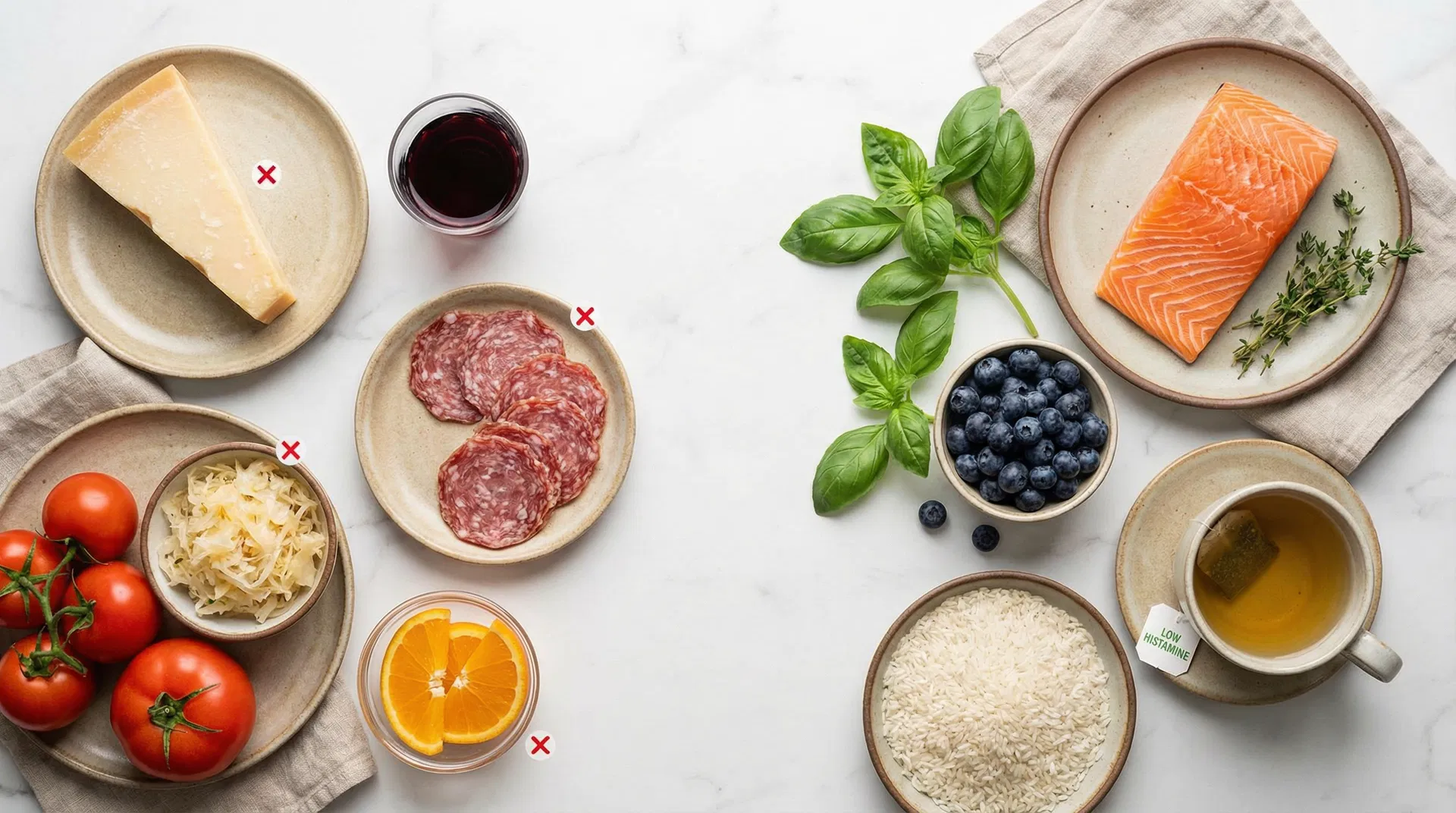
Understanding which foods are high in histamine can help you manage symptoms while you work on the underlying gut issues. Histamine levels in food increase with ageing, fermentation, and bacterial activity. The following categories tend to be the highest:
* Aged cheeses: Parmesan, cheddar, Gouda, blue cheese. * Fermented foods: Sauerkraut, kimchi, kombucha, soy sauce, vinegar. * Cured and processed meats: Salami, bacon, ham, smoked fish. * Alcohol: Red wine, champagne, beer. * Certain fish: Tuna, mackerel, sardines, anchovies, especially if not very fresh. * Fermented dairy: Yoghurt, kefir, buttermilk. * Certain vegetables: Tomatoes, aubergine, spinach, avocado. * Citrus fruits: Oranges, lemons, grapefruit.
It is important to note that a low-histamine diet is a therapeutic tool, not a long-term solution. Restricting these foods indefinitely can reduce microbiome diversity and lead to nutritional deficiencies. The goal should always be to identify and address the root cause so that you can gradually reintroduce foods.
A Functional Medicine Approach to Histamine Intolerance
At Gut Philosophy, we take a root-cause approach to histamine intolerance rather than simply recommending long-term dietary restriction. The process typically involves several key steps.
1. Comprehensive Gut Assessment
A thorough gut health assessment is the starting point. This may include a comprehensive stool analysis to evaluate microbiome composition, markers of inflammation, and digestive function. SIBO breath testing is also recommended when symptoms suggest bacterial overgrowth. These tests help identify whether dysbiosis, leaky gut, or SIBO is driving the histamine issue.
2. Gut Barrier Repair
Restoring the integrity of the gut lining is essential for improving DAO production. Key strategies include removing gut irritants such as alcohol, processed foods, and identified food triggers. Nutrients that support gut barrier repair include L-glutamine, zinc carnosine, and omega-3 fatty acids. Bone broth and collagen peptides also provide the amino acids needed for enterocyte repair.
3. Microbiome Rebalancing
Addressing dysbiosis involves reducing histamine-producing bacteria and supporting histamine-degrading species. This is where targeted probiotic supplementation becomes important. Not all probiotics are suitable for histamine intolerance. Some strains, particularly certain Lactobacillus species used in commercial supplements, actually produce histamine. Choosing strains that are histamine-neutral or histamine-degrading is critical.
4. DAO Support
While addressing the root cause, supplemental DAO enzyme taken before meals can help manage symptoms. Certain nutrients also support the body's own DAO production, including vitamin B6, vitamin C, copper, and zinc. Ensuring adequate intake of these cofactors can help improve endogenous DAO activity over time.
5. Addressing Contributing Factors
Histamine intolerance rarely exists in isolation. Chronic stress increases mast cell activation and histamine release. Hormonal fluctuations, particularly oestrogen dominance, can increase histamine sensitivity because oestrogen stimulates mast cells. Certain medications, including NSAIDs, some antidepressants, and proton pump inhibitors, can also impair DAO activity.
Frequently Asked Questions
Is histamine intolerance the same as a histamine allergy?
No. A true allergy involves an IgE-mediated immune response to a specific allergen. Histamine intolerance is a metabolic condition caused by an imbalance between histamine accumulation and the body's ability to break it down. Allergy tests will typically be negative in histamine intolerance because the immune system is not the primary driver.
Can you develop histamine intolerance suddenly?
Yes. Many people develop histamine intolerance after a period of gut disruption, such as a course of antibiotics, a bout of food poisoning, or prolonged stress. The onset can feel sudden, but the underlying gut changes usually develop over weeks or months before symptoms become noticeable.
How long does it take to improve histamine intolerance?
With a targeted approach addressing the root cause, most people begin to notice improvements within four to eight weeks. Full resolution, including the ability to reintroduce higher-histamine foods, typically takes three to six months depending on the severity of the underlying gut issues.
Should I avoid all fermented foods if I have histamine intolerance?
Not necessarily. While many fermented foods are high in histamine, some people tolerate certain fermented foods better than others. During the initial phase of treatment, reducing fermented food intake can help lower the overall histamine load. As gut health improves and DAO function is restored, many people can gradually reintroduce fermented foods without issues.
Can children have histamine intolerance?
Yes, although it is less common in children than in adults. Children with recurrent unexplained hives, abdominal pain, or headaches after meals should be evaluated for histamine intolerance, especially if standard allergy testing is negative. Gut health support is equally important in paediatric cases.
Take the Next Step
Histamine intolerance can be frustrating and isolating, especially when conventional testing fails to provide answers. But understanding the gut-histamine connection opens the door to effective, lasting solutions. If you suspect histamine intolerance is behind your symptoms, book a discovery call with Elena to discuss a personalised assessment and treatment plan. You can also explore our food sensitivity services to learn more about how we investigate and resolve complex food reactions.