
If you are in your late 30s or 40s and have noticed that your digestion is no longer what it used to be, you are not alone. Many women experience a bewildering array of new digestive symptoms during perimenopause: bloating that seems to appear from nowhere, food sensitivities that never existed before, changes in bowel habits, and a general feeling that their gut has become unpredictable. What is often overlooked, even by many healthcare professionals, is that these digestive changes are directly connected to the hormonal shifts of perimenopause. Oestrogen, progesterone, and your gut microbiome are intimately linked, and when one changes, the others follow.
This article explores the science behind the oestrogen-gut connection, explains why perimenopause triggers so many digestive symptoms, and provides practical, evidence-based strategies to support your gut health through this transition. Understanding what is happening in your body is the first step towards feeling like yourself again.
What Is Perimenopause and When Does It Start?
Perimenopause is the transitional phase leading up to menopause, which is officially defined as 12 consecutive months without a period. While menopause typically occurs around age 51 in the UK, perimenopause can begin much earlier, sometimes in the late 30s but more commonly in the early to mid-40s. This transition can last anywhere from four to ten years.
During perimenopause, your ovaries gradually produce less oestrogen and progesterone, but this decline is not smooth or linear. Hormone levels can fluctuate wildly from month to month, with some months producing higher oestrogen levels than your reproductive years and others producing very little. It is this hormonal volatility, rather than simply low hormones, that drives many perimenopausal symptoms, including the digestive ones.
How Oestrogen Affects Your Gut
Oestrogen is not just a reproductive hormone. It has receptors throughout your entire body, including your gastrointestinal tract. Its influence on gut health is far more profound than most people realise.
Oestrogen and Gut Motility
Oestrogen directly influences the speed at which food moves through your digestive tract. It affects the smooth muscle contractions of the intestines, known as peristalsis. When oestrogen levels are high, gut motility tends to slow down, which can lead to constipation and bloating. When oestrogen drops, motility can speed up, potentially causing looser stools or diarrhoea. During perimenopause, these fluctuations can mean alternating between constipation and diarrhoea, sometimes within the same week. Many women are misdiagnosed with IBS during this time when the underlying driver is hormonal.
Oestrogen and the Gut Barrier
Oestrogen plays a protective role in maintaining the integrity of the intestinal lining. It supports the production of mucus that coats and protects the gut wall, and it helps maintain the tight junctions between intestinal cells. As oestrogen levels decline during perimenopause, this protective effect diminishes, potentially leading to increased intestinal permeability, commonly known as leaky gut. A more permeable gut barrier allows larger molecules to pass into the bloodstream, which can trigger immune responses and inflammation. This may explain why many women develop new food sensitivities during perimenopause that they never had before.
Oestrogen and Gut Inflammation
Oestrogen has well-documented anti-inflammatory properties. It helps regulate the immune response in the gut by modulating the activity of immune cells in the gut-associated lymphoid tissue (GALT). As oestrogen declines, this anti-inflammatory protection is reduced, and low-grade gut inflammation can increase. This chronic, low-level inflammation can contribute to bloating, discomfort, and altered bowel habits.
The Estrobolome: Your Gut Bacteria and Oestrogen Recycling
One of the most fascinating discoveries in recent microbiome research is the estrobolome, a collection of gut bacteria that are capable of metabolising oestrogen. The estrobolome produces an enzyme called beta-glucuronidase, which plays a key role in determining how much oestrogen is recycled back into your bloodstream versus how much is excreted.
How the Estrobolome Works
When your liver processes oestrogen for elimination, it attaches a molecule called glucuronic acid to it in a process called conjugation. This conjugated oestrogen is then sent to the gut via bile for excretion. However, certain gut bacteria produce beta-glucuronidase, which can remove the glucuronic acid tag, effectively deconjugating the oestrogen and allowing it to be reabsorbed into the bloodstream. In a healthy, balanced microbiome, this process is well-regulated. But when the microbiome is disrupted, either through poor diet, stress, antibiotics, or other factors, the estrobolome can become dysregulated.
The Two-Way Relationship
This creates a two-way relationship between hormones and gut health:
* Dysbiosis affects hormones: An imbalanced gut microbiome can lead to either too much or too little oestrogen being recycled, contributing to oestrogen dominance or deficiency. * Hormonal changes affect the microbiome: Declining oestrogen during perimenopause directly alters the composition of the gut microbiome, reducing diversity and changing the balance of bacterial species.
This bidirectional relationship means that supporting your gut health during perimenopause is not just about digestion. It is about supporting your entire hormonal balance.
Common Perimenopausal Gut Symptoms
Understanding which symptoms are connected to the hormonal-gut axis can help you identify what is happening and seek appropriate support. Here are the most common gut-related symptoms women experience during perimenopause:
| Symptom | Hormonal Connection | | :--- | :--- | | Increased bloating | Fluctuating oestrogen affects gut motility and fluid retention; progesterone decline reduces smooth muscle relaxation | | New food sensitivities | Declining oestrogen weakens the gut barrier, allowing larger molecules to trigger immune responses | | Alternating constipation and diarrhoea | Oestrogen fluctuations directly affect the speed of intestinal transit | | Increased reflux or heartburn | Hormonal changes affect the lower oesophageal sphincter and stomach acid production | | Weight gain around the middle | Altered microbiome composition affects metabolism; cortisol and insulin resistance increase with hormonal changes | | Worsening PMS-related digestive symptoms | More dramatic hormonal swings amplify the gut's response to cyclical changes | | Increased gas and flatulence | Microbiome composition shifts as oestrogen declines, altering fermentation patterns |
Evidence-Based Strategies to Support Your Gut During Perimenopause
The good news is that there is a great deal you can do to support your gut health during this transition. The following strategies address both the hormonal and microbial aspects of perimenopausal digestive changes.
1. Prioritise Phytoestrogen-Rich Foods
Phytoestrogens are plant compounds that have a mild oestrogenic effect in the body. They can help modulate oestrogen levels by binding to oestrogen receptors, providing a gentle buffering effect during hormonal fluctuations. The best dietary sources include:
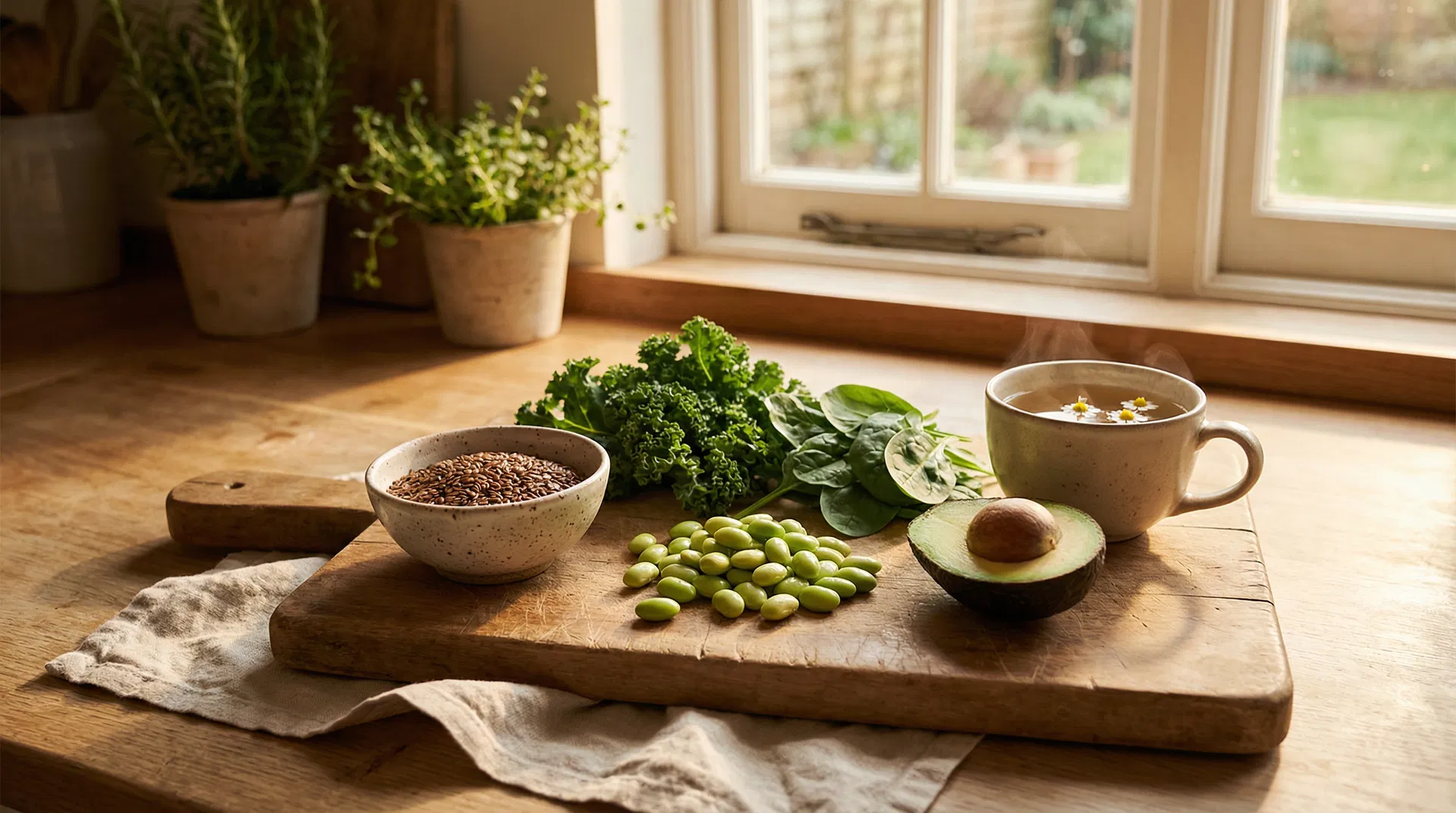
* Flaxseeds: The richest dietary source of lignans, a type of phytoestrogen. Aim for one to two tablespoons of ground flaxseeds daily. * Fermented soy: Tempeh, miso, and natto contain isoflavones that are more bioavailable than those in unfermented soy. * Chickpeas and lentils: Excellent sources of both phytoestrogens and prebiotic fibre. * Berries and pomegranates: Rich in polyphenols that support both oestrogen metabolism and microbiome diversity.
2. Support Your Microbiome Diversity
A diverse microbiome is more resilient to the hormonal changes of perimenopause. Focus on eating a wide variety of plant foods, aiming for 30 different plants per week. Include fermented foods daily to introduce beneficial bacteria. Kefir, in particular, has been shown to support both gut health and bone density, which is an additional concern during perimenopause.
3. Manage Blood Sugar and Insulin
Insulin resistance becomes more common during perimenopause as oestrogen's protective effect on insulin sensitivity diminishes. Blood sugar spikes and crashes can worsen gut symptoms, increase inflammation, and contribute to weight gain. Practical strategies include eating protein and healthy fats with every meal, avoiding refined carbohydrates and sugary snacks, and not skipping meals. Stable blood sugar also supports more stable energy and mood.
4. Address Stress and Cortisol
Perimenopause often coincides with a particularly demanding life stage: career pressures, caring for ageing parents, raising teenagers, and navigating relationship changes. Chronic stress elevates cortisol, which directly damages the gut lining, reduces microbial diversity, and worsens every digestive symptom. Prioritising stress management is not a luxury during perimenopause; it is a clinical necessity. Regular movement, adequate sleep, and practices like yoga, meditation, or simply spending time in nature can all help regulate the stress-gut axis.
5. Consider Targeted Supplementation
Certain supplements can provide additional support during this transition:
* Magnesium glycinate: Supports gut motility, reduces bloating, improves sleep quality, and helps manage stress. Many women are deficient in magnesium, and requirements increase during perimenopause. * Omega-3 fatty acids: Anti-inflammatory and supportive of gut barrier integrity. Aim for at least 1,000mg of combined EPA and DHA daily. * Vitamin D: Supports immune function and gut barrier health. Have your levels tested and supplement accordingly, especially during the UK winter months. * A quality probiotic: Look for strains that have been specifically researched for women's health, such as Lactobacillus rhamnosus and Lactobacillus reuteri.
6. Optimise Your Fibre Intake
Fibre is essential for gut health at every life stage, but it becomes particularly important during perimenopause. Soluble fibre helps regulate bowel movements and feeds beneficial bacteria. Insoluble fibre adds bulk and supports regular elimination. Cruciferous vegetables like broccoli, cauliflower, Brussels sprouts, and kale are especially valuable because they contain compounds that support healthy oestrogen metabolism through the liver. Aim for at least 30 grams of fibre daily, increasing gradually to avoid worsening bloating.
When Digestive Symptoms Need Further Investigation
While many perimenopausal digestive symptoms are driven by hormonal changes and can be managed with the strategies above, it is important to know when further investigation is warranted. New or persistent symptoms should not be automatically attributed to perimenopause without proper assessment.
Consider seeking professional support if:
* Your symptoms are severe or significantly affecting your quality of life. * You have unexplained weight loss, blood in your stool, or persistent pain. * Dietary and lifestyle changes have not improved your symptoms after eight to twelve weeks. * You suspect you may have developed new food intolerances or sensitivities. * You want a comprehensive assessment of your gut health and hormonal status.
A comprehensive stool analysis combined with hormone testing can provide a complete picture of what is happening and guide a targeted treatment plan. At Gut Philosophy, we regularly work with women navigating perimenopause and understand the complex interplay between hormones, the microbiome, and digestive health.
Frequently Asked Questions
Can perimenopause cause IBS?
Perimenopause does not directly cause IBS, but the hormonal fluctuations can trigger or worsen IBS-like symptoms such as bloating, altered bowel habits, and abdominal discomfort. Many women are first diagnosed with IBS during perimenopause when the underlying driver is actually hormonal. A thorough assessment that considers both gut health and hormonal status is essential for accurate diagnosis and effective treatment.
Does HRT help with perimenopausal gut symptoms?
Hormone replacement therapy (HRT) can help stabilise oestrogen levels, which may improve gut symptoms driven by hormonal fluctuations. However, HRT alone does not address underlying gut dysbiosis or microbiome changes. The most effective approach combines hormonal support (where appropriate) with targeted gut health strategies. Always discuss HRT with your GP or a qualified hormone specialist.
Why have I suddenly become intolerant to foods I used to eat?
Declining oestrogen can weaken your gut barrier, allowing larger food molecules to interact with your immune system and trigger reactions. This is why many women develop new food sensitivities during perimenopause. An elimination diet can help identify trigger foods, while gut barrier support through diet and targeted supplementation can help restore tolerance over time.
At what age do perimenopausal gut symptoms typically start?
Most women begin to notice perimenopausal symptoms, including digestive changes, in their mid-40s, though some may experience them from their late 30s. The timing varies considerably between individuals and is influenced by genetics, lifestyle, and overall health. If you are experiencing new digestive symptoms alongside other perimenopausal signs like irregular periods, sleep disturbance, or mood changes, the hormonal connection is worth exploring.
Take the Next Step
Perimenopause is a natural transition, but that does not mean you have to suffer through it with digestive misery. Understanding the connection between your hormones and your gut is empowering, and there are effective, evidence-based strategies to support your body through this change. If you are struggling with perimenopausal gut symptoms and want personalised support, book a discovery call with Elena to discuss how we can help. You can also explore our hormonal health services to learn more about our approach to supporting women through perimenopause and beyond.